
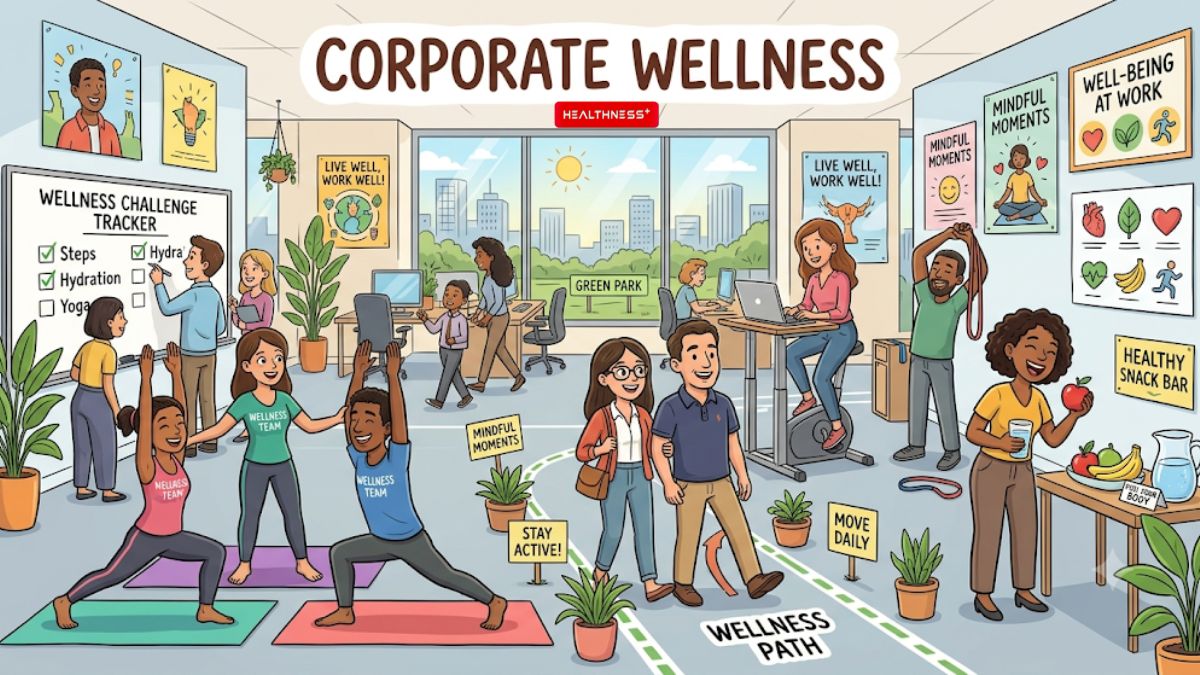

Corporate Wellness: Why Employee Health Is No Longer Just an HR Responsibility but a Business Strategy
"A company's greatest asset isn't its technology, its buildings, or its products. It's the health, energy, and productivity of its people."
The Modern Workplace Has Changed
Today's workplaces are faster, more connected, and more demanding than ever before.
Employees spend long hours in front of screens, attend back-to-back virtual meetings, respond to messages outside working hours, manage increasing workloads, and often struggle to maintain a healthy work-life balance.
While businesses have become more efficient, the health of the workforce has quietly become one of the biggest challenges facing organizations across the world.
Rising rates of obesity, diabetes, hypertension, heart disease, stress, anxiety, poor sleep, and musculoskeletal disorders are affecting employees across every industry.
These health challenges don't remain personal problems.
They eventually become business problems.
Employee Health Directly Impacts Business Performance
Every organization invests in technology, infrastructure, cybersecurity, marketing, and talent acquisition.
Yet one of the largest determinants of organizational performance is often overlooked:
The health of its employees.
Healthy employees are more likely to:
- Be productive.
- Have higher energy levels.
- Think more clearly.
- Collaborate effectively.
- Take fewer sick days.
- Stay engaged at work.
- Remain with the organization longer.
Conversely, poor employee health contributes to absenteeism, presenteeism, healthcare costs, workplace accidents, and employee turnover.
Corporate wellness is therefore not simply about improving employee wellbeing. It is about improving organizational performance.
The Growing Burden of Lifestyle Diseases
Non-Communicable Diseases (NCDs), including diabetes, cardiovascular disease, hypertension, obesity, cancer, and chronic respiratory diseases, are now the leading cause of death globally.
According to the World Health Organization (WHO), NCDs account for approximately 74% of all deaths worldwide, and many are linked to modifiable lifestyle factors such as poor diet, physical inactivity, tobacco use, harmful alcohol consumption, inadequate sleep, and chronic stress.
In India, NCDs account for approximately 63% of all deaths, making them the country's leading cause of mortality.
Many of these conditions develop during people's most productive working years.
This means organizations are increasingly managing a workforce that may appear healthy but is quietly accumulating health risks.
The Hidden Cost: Presenteeism
When employers think about health costs, absenteeism usually receives the most attention.
But a much larger, and often invisible, cost is presenteeism.
Presenteeism occurs when employees are physically present at work but are unable to perform at their full capacity because of health issues.
Examples include:
- Poor concentration due to inadequate sleep.
- Fatigue caused by unhealthy lifestyles.
- Chronic back or neck pain.
- Stress and burnout.
- Depression or anxiety.
- Poorly controlled diabetes.
- Frequent headaches.
- Digestive disorders.
Employees may still be working, but their productivity, creativity, decision-making, and engagement are significantly reduced.
Research consistently suggests that presenteeism often costs organizations more than absenteeism.
Stress and Mental Health in the Workplace
Modern work environments can expose employees to sustained levels of psychological stress.
Deadlines.
High workloads.
Job insecurity.
Long working hours.
Digital overload.
Poor work-life balance.
When unmanaged, chronic workplace stress increases the risk of:
- Burnout
- Anxiety
- Depression
- Sleep disorders
- Cardiovascular disease
- Reduced productivity
The World Health Organization recognizes burnout as an occupational phenomenon resulting from chronic workplace stress that has not been successfully managed.
Supporting employee mental wellbeing is therefore both a health priority and a business priority.
Healthy Employees Build Stronger Businesses
Corporate wellness programs are no longer limited to annual health camps or discounted gym memberships.
Modern workplace wellness focuses on creating environments that support healthy behaviours every day.
Effective corporate wellness initiatives may include:
- Preventive health risk assessments.
- Nutrition education.
- Physical activity programs.
- Mental wellbeing initiatives.
- Stress management workshops.
- Sleep health awareness.
- Tobacco cessation support.
- Ergonomic workplace improvements.
- Health coaching.
- Leadership engagement.
The goal is not simply to treat illness but to reduce risk before illness develops.
Prevention Makes Business Sense
Preventive healthcare is often viewed as an employee benefit.
In reality, it is a business investment.
Research has shown that many chronic diseases can be delayed or prevented by addressing lifestyle-related risk factors early.
Supporting healthier behaviours may contribute to:
- Reduced sick leave.
- Improved productivity.
- Better employee engagement.
- Lower healthcare utilization.
- Improved workplace morale.
- Greater employee retention.
Organizations that invest in prevention are investing in the long-term resilience of their workforce.
Corporate Wellness Is Also About Culture
Successful wellness programs extend beyond fitness challenges or one-time events.
They become part of organizational culture.
Healthy workplace cultures encourage:
- Regular movement.
- Healthy food choices.
- Adequate breaks.
- Psychological safety.
- Work-life balance.
- Supportive leadership.
- Open conversations about mental health.
Employees are more likely to adopt healthy behaviours when leaders actively support them.
Culture shapes habits.
Habits shape health.
Health shapes performance.
Why Early Risk Identification Matters
Most chronic diseases develop silently.
Employees may appear healthy while gradually developing:
- High blood pressure.
- Prediabetes.
- Fatty liver disease.
- Obesity.
- Poor sleep.
- Chronic stress.
- Nutritional deficiencies.
By the time symptoms appear, disease has often progressed.
This is where preventive health assessments become valuable.
Early identification allows employees to understand their health risks before serious illness develops, creating opportunities for timely lifestyle changes and appropriate medical follow-up when needed.
Knowledge empowers action.
Corporate Wellness Supports Talent Retention
Today's workforce increasingly values employers who invest in employee wellbeing.
Competitive salaries remain important.
But employees also seek workplaces that support:
- Physical health.
- Mental wellbeing.
- Flexible working.
- Professional development.
- Purpose.
- Psychological safety.
Organizations known for prioritizing employee wellbeing often strengthen their employer brand and improve retention in competitive labour markets.
Wellness Is Not a One-Day Event
Many organizations organize annual health check-up camps.
While valuable, a single day cannot offset 364 days of unhealthy habits.
Effective wellness requires continuous engagement.
Small, consistent improvements in:
- Nutrition.
- Physical activity.
- Sleep.
- Stress management.
- Preventive education.
often have greater long-term impact than isolated interventions.
Corporate wellness is a journey, not a campaign.
Leadership Sets the Tone
Employees notice what leaders prioritize.
When leadership consistently models healthy behaviours, taking breaks, respecting work-life boundaries, participating in wellness initiatives, and openly discussing wellbeing. It sends a powerful message throughout the organization.
Wellness becomes part of how the company operates, not merely another HR initiative.
Leadership commitment is often the difference between a successful wellness strategy and an unused wellness portal.
The Business Case for Prevention
Preventive healthcare is no longer solely the responsibility of hospitals or individuals.
Employers have a unique opportunity to influence the daily environments where adults spend a significant portion of their lives.
A healthier workforce contributes to:
- Higher productivity.
- Better decision-making.
- Lower absenteeism.
- Reduced presenteeism.
- Improved morale.
- Stronger collaboration.
- Greater innovation.
- Sustainable business performance.
Employee health is therefore not separate from business success.
It is one of its strongest foundations.
Investing in People Is Investing in the Future
Organizations routinely maintain their buildings, service their equipment, update their technology, and strengthen their cybersecurity.
Yet the most valuable asset within every business remains its people.
Healthy employees are more resilient.
More creative.
More engaged.
More productive.
Corporate wellness is not about offering another employee perk.
It is about creating an environment where people have the opportunity to thrive.
Because when employees become healthier, organizations become stronger.
And when organizations invest in prevention today, they help build a healthier, more productive workforce for tomorrow.
References
-
World Health Organization (WHO). Healthy Workplaces: A Model for Action. https://www.who.int/publications/i/item/healthy-workplaces-a-model-for-action
-
World Health Organization (WHO). Noncommunicable Diseases Fact Sheet. https://www.who.int/news-room/fact-sheets/detail/noncommunicable-diseases
-
World Health Organization (WHO). Mental Health at Work. https://www.who.int/teams/mental-health-and-substance-use/promotion-prevention/mental-health-in-the-workplace
-
International Labour Organization (ILO). Safety and Health at the Heart of the Future of Work. https://www.ilo.org
-
Centers for Disease Control and Prevention (CDC). Workplace Health Model. https://www.cdc.gov/workplace-health-promotion
-
Deloitte Insights. The ROI in Workplace Mental Health Programs. https://www2.deloitte.com
-
World Economic Forum. The Future of Jobs Report. https://www.weforum.org/reports/the-future-of-jobs-report
-
Harvard T.H. Chan School of Public Health. Workplace Wellness Programs Study. https://www.hsph.harvard.edu
-
Ministry of Health & Family Welfare, Government of India. National Programme for Prevention and Control of Non-Communicable Diseases (NP-NCD). https://ncd.mohfw.gov.in
-
American College of Occupational and Environmental Medicine (ACOEM). Healthy Workforce Initiatives. https://acoem.org