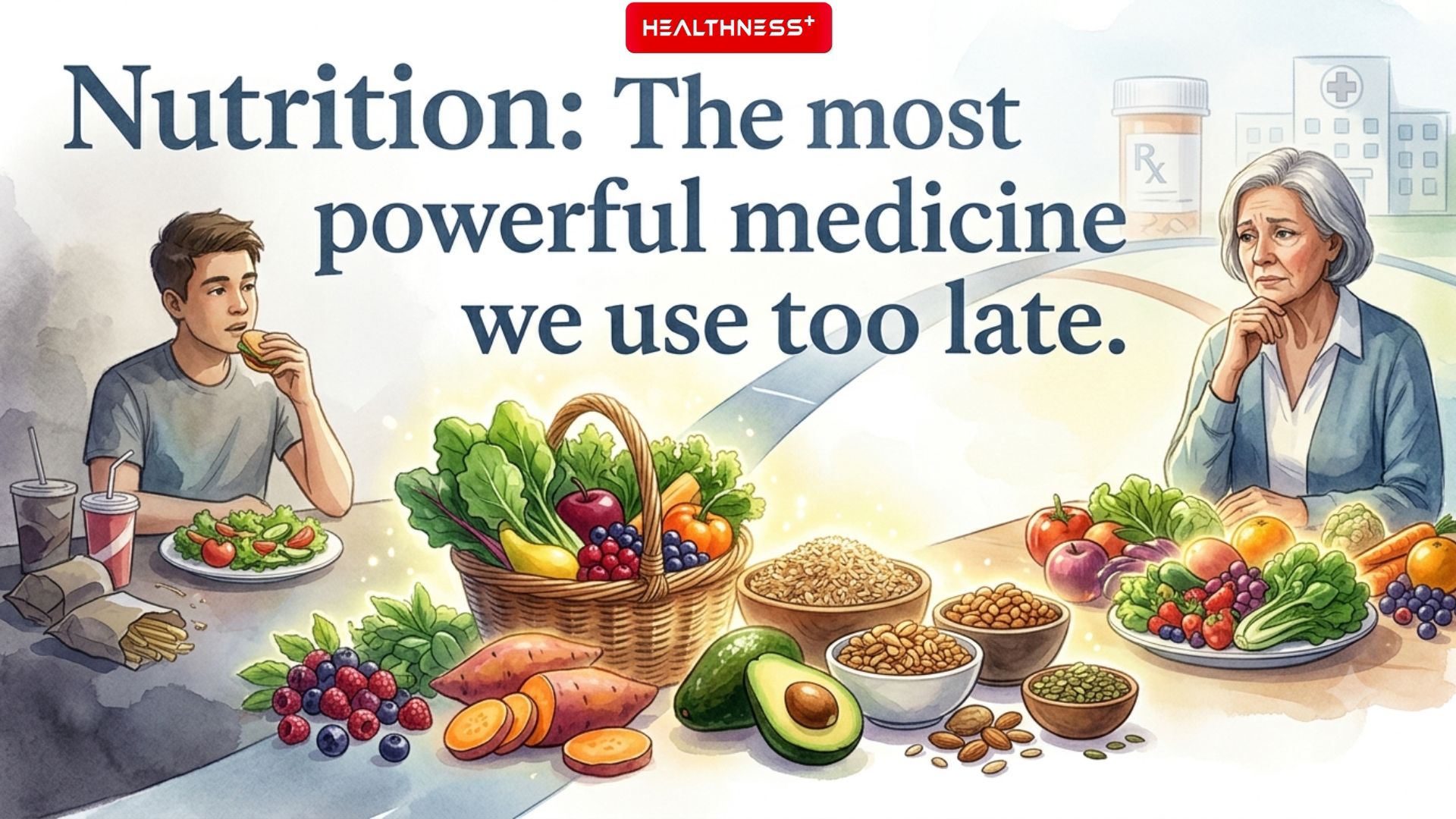

Nutrition: The Most Powerful Medicine We Use Too Late
"Every meal is either feeding health or feeding disease. The choice is made long before symptoms appear."
We Eat Every Day. Yet Nutrition Is Often an Afterthought in Healthcare.
Modern healthcare has achieved remarkable success in treating disease.
We have medicines that lower blood pressure, control blood sugar, reduce cholesterol, and manage heart disease. We have sophisticated surgeries, advanced imaging, and life-saving intensive care.
But despite these advances, India continues to see an alarming rise in obesity, diabetes, hypertension, fatty liver disease, heart disease, and other chronic illnesses.
If food is something we consume three or more times a day, why does it receive so little attention until disease has already developed?
The answer lies in how healthcare has traditionally been designed.
For decades, healthcare has largely focused on diagnosing and treating illness. Nutrition, despite being one of the most important determinants of long-term health, has often been viewed as supportive rather than foundational.
Yet scientific evidence increasingly tells a different story.
The Rise of Lifestyle Diseases in India
India is experiencing a rapid increase in Non-Communicable Diseases (NCDs), including:
- Type 2 Diabetes
- Hypertension
- Heart Disease
- Stroke
- Obesity
- Fatty Liver Disease
- Certain Cancers
- Chronic Kidney Disease
According to the World Health Organization (WHO), NCDs account for approximately 63% of all deaths in India, making them the leading cause of mortality in the country. These diseases are strongly associated with modifiable lifestyle factors, including unhealthy diets, physical inactivity, tobacco use, and harmful alcohol consumption.
Nutrition is one of the few risk factors that individuals can improve every single day.
Food Does More Than Provide Calories
For many years, nutrition was viewed simply as a source of energy.
Today, we understand that food influences nearly every system in the human body.
The nutrients we consume affect:
- Blood sugar regulation
- Blood pressure
- Cholesterol metabolism
- Hormone balance
- Immune function
- Gut microbiome
- Inflammation
- Liver health
- Brain function
- Muscle maintenance
- Bone health
- Healthy ageing
Food is not merely fuel.
It is information that continuously communicates with our cells.
Every meal sends signals that influence how our bodies function.
Chronic Diseases Don't Develop Overnight
A person does not develop diabetes in a week.
Heart disease usually develops over many years.
Fatty liver disease progresses gradually.
High blood pressure often rises silently over decades.
Long before symptoms appear, subtle biological changes are already taking place.
These include:
- Insulin resistance
- Chronic low-grade inflammation
- Excess body fat
- Altered cholesterol metabolism
- Reduced metabolic flexibility
- Oxidative stress
Nutrition influences each of these processes.
That is why healthy eating is not simply about weight loss. It is about reducing the biological conditions that allow disease to develop.
Nutrition Is the Foundation of Preventive Healthcare
Preventive healthcare aims to reduce the risk of disease before illness occurs.
Nutrition is central to this goal because it addresses many of the underlying risk factors that contribute to chronic disease.
Healthy dietary patterns have been associated with lower risks of cardiovascular disease, type 2 diabetes, hypertension, obesity, and certain cancers. Organizations such as the World Health Organization emphasize healthy diets as one of the key strategies for preventing NCDs.
Unlike many medical treatments that begin after diagnosis, nutrition can influence health decades before disease develops.
Prevention Begins Long Before the First Blood Test
Many people believe they are healthy because their annual blood tests are normal.
But disease often begins long before laboratory values become abnormal.
For example:
A person may experience years of:
- Poor dietary habits
- Excess sugar intake
- Highly processed foods
- Low fibre intake
- Inadequate protein
- Micronutrient deficiencies
before blood glucose finally rises into the diabetic range.
By the time diabetes is diagnosed, the disease process has usually been developing for years.
Nutrition provides an opportunity to intervene much earlier.
Beyond Calories: Food Quality Matters
Preventive nutrition is not simply about eating less.
It is about eating better.
Research increasingly supports dietary patterns that emphasize:
- Vegetables and fruits
- Whole grains
- Legumes
- Nuts and seeds
- Healthy fats
- Adequate protein
- Minimally processed foods
At the same time, reducing the intake of ultra-processed foods, excessive added sugars, trans fats, and excess sodium can help lower the risk of chronic disease.
Healthy nutrition is about improving overall dietary patterns rather than following temporary diets.
The Gut: An Overlooked Partner in Health
Inside every person lives a complex community of trillions of microorganisms collectively known as the gut microbiome.
These microbes help regulate:
- Digestion
- Immune function
- Metabolism
- Vitamin production
- Inflammation
Diet strongly influences the diversity and health of the gut microbiome.
Fibre-rich foods, fruits, vegetables, legumes, and fermented foods support beneficial gut bacteria, while diets high in ultra-processed foods and low in fibre may reduce microbial diversity.
A healthy gut has increasingly been linked to better metabolic health and reduced risk of chronic disease.
Nutrition Is Personal
No single diet works for everyone.
Age, activity level, medical conditions, cultural preferences, genetics, and personal goals all influence nutritional needs.
What remains consistent, however, is the importance of building sustainable eating habits rather than relying on short-term restrictive diets.
Preventive nutrition is not about perfection.
It is about consistency.
Food Is a Daily Opportunity
Unlike medicine, which may be taken once or twice a day, nutrition offers multiple opportunities every day to support better health.
Every breakfast...
Every lunch...
Every dinner...
Every snack...
becomes another opportunity to nourish the body.
Small improvements repeated consistently over months and years often have a greater impact than dramatic changes that cannot be maintained.
Nutrition Alone Is Not Enough
Nutrition is one of the most powerful tools in preventive healthcare, but it works best when combined with other healthy lifestyle practices, including:
- Regular physical activity
- Adequate sleep
- Stress management
- Avoidance of tobacco
- Limiting alcohol consumption
- Maintaining a healthy body weight
- Regular preventive health screenings
Health is shaped by the interaction of many daily habits.
Nutrition is one of the strongest pillars, but it is part of a broader lifestyle approach.
A Shift in Perspective
For many people, nutrition becomes important only after receiving a diagnosis.
After diabetes.
After high cholesterol.
After a heart attack.
After fatty liver.
Imagine instead if nutrition became important before disease appeared.
That is the true promise of preventive healthcare, not waiting until illness develops, but creating the conditions in which good health can thrive.
The Future of Healthcare Begins on the Plate
Healthcare will always need hospitals, doctors, medicines, and advanced treatments.
But if we want to reduce the growing burden of chronic disease, we must also recognize the role of everyday choices.
Nutrition is not a replacement for medical care.
It is one of its strongest partners.
The food we eat today influences the health we experience tomorrow.
In many cases, prevention does not begin in the clinic.
It begins in the kitchen.
References
- World Health Organization. Noncommunicable diseases - Questions and Answers. https://www.who.int/news-room/questions-and-answers/item/ncds
- World Health Organization. Healthy Diet Fact Sheet. https://www.who.int/news-room/fact-sheets/detail/healthy-diet
- Ministry of Health & Family Welfare, Government of India. National Programme for Prevention and Control of Non-Communicable Diseases (NP-NCD). https://ncd.mohfw.gov.in
- Institute for Health Metrics and Evaluation (IHME). Global Burden of Disease Study. https://www.healthdata.org