
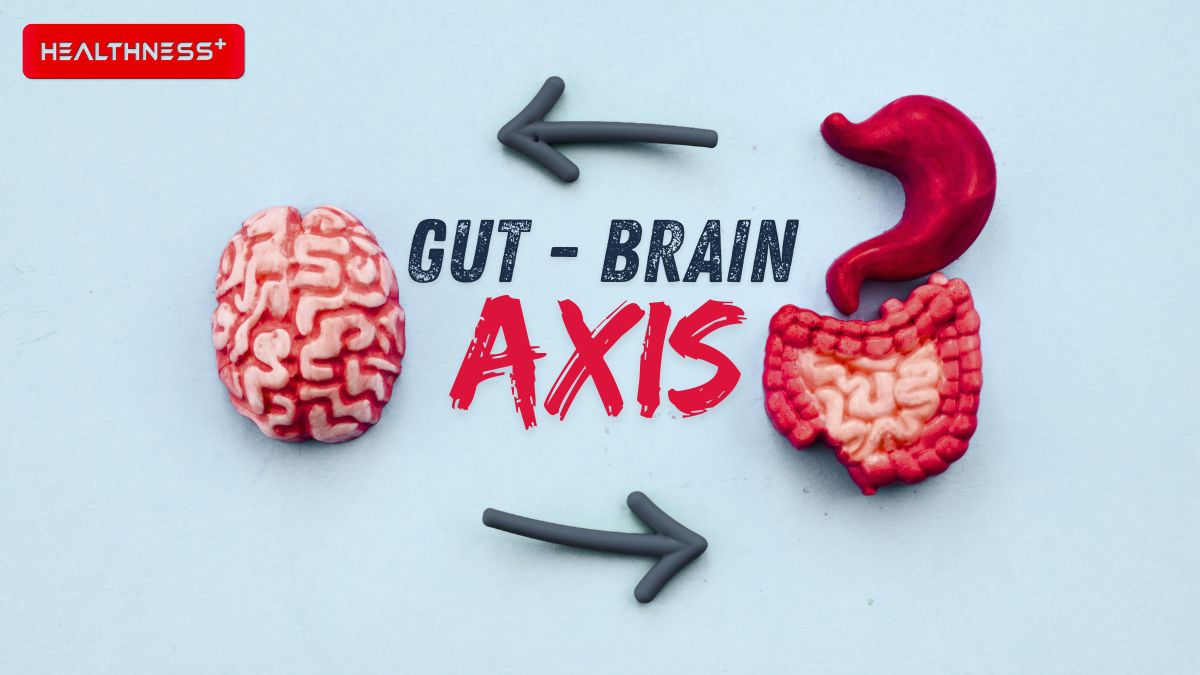

The Gut-Brain Axis: How Your Second Brain Shapes Your Mood, Focus, and Daily Energy
Most people think of digestion as something that happens quietly in the background, a plumbing system separate from thought, mood, or stress. Science tells a very different story. Your gut and your brain are in constant, two-way conversation, and that conversation shapes how you feel, think, sleep, and cope with pressure every single day. This relationship is called the gut-brain axis, and understanding it is one of the most practical things you can do for your everyday wellbeing, especially if you're navigating the long hours, irregular meals, and chronic low-grade stress that define much of modern corporate life.
This article breaks down what the gut-brain axis actually is, how it shows up in ordinary daily experience, and what specifically disrupts it, grounded in peer-reviewed research, not wellness-industry folklore.
What Is the Gut-Brain Axis?
The gut-brain axis (GBA) is the bidirectional communication network linking your gastrointestinal tract and your central nervous system. It isn't a single nerve or a single hormone. It's an entire communication infrastructure built from four interconnected systems:
- The nervous system, primarily the vagus nerve, along with the "second brain" inside your gut wall called the enteric nervous system (ENS)
- The endocrine system, hormonal signaling via the hypothalamic-pituitary-adrenal (HPA) axis, your body's central stress-response circuit
- The immune system, inflammatory signaling molecules (cytokines) that travel between gut and brain
- The gut microbiome, the trillions of bacteria living in your intestines, which produce neurotransmitters, metabolites, and signaling compounds
A comprehensive review in Nature's Signal Transduction and Targeted Therapy describes this as bidirectional communication between the gut microbiome and the central nervous system, coordinated through the immune system, vagus nerve, enteric nervous system, neuroendocrine system, and circulatory system, with gut bacteria capable of producing or stimulating neurotransmitters including serotonin, dopamine, and GABA [1].
This is why "gut feeling" isn't just a figure of speech. Your gut genuinely has its own semi-autonomous nervous system with more neurons than your spinal cord, and it is in near-constant dialogue with your brain.
The Vagus Nerve: The Main Communication Cable
The vagus nerve is the primary neural highway between gut and brain. It's composed of roughly 80% afferent fibers, meaning the majority of its traffic runs from gut to brain, not the other way around [2]. In practical terms: your gut sends far more signals up to your brain than your brain sends down. What's happening in your digestive system is constantly informing your mental and emotional state, often without you consciously noticing it.
Research on depression has found that selective serotonin reuptake inhibitors (SSRIs), one of the most common classes of antidepressant medication, appear to rely partly on the vagus nerve to exert their therapeutic effects, underscoring how central this gut-to-brain cable is to mood regulation [3].
Serotonin: Made Mostly in Your Gut, Not Your Brain
Here's a fact that surprises most people: approximately 90 to 95% of the body's serotonin, the neurotransmitter most associated with mood, is produced not in the brain, but in the gut, primarily by specialized enterochromaffin cells lining the intestinal wall [4][5]. This gut-derived serotonin doesn't cross into the brain directly (it can't pass the blood-brain barrier), but it plays a critical role in regulating gut motility, and it influences brain function indirectly through the vagus nerve and other signaling pathways [6].
This is a big part of why digestive health and emotional health are so tightly linked, the raw material for your primary "feel-good" neurotransmitter is manufactured almost entirely within your digestive tract, and its production is directly influenced by the composition of your gut bacteria [4].
How the Gut-Brain Axis Shows Up in Daily Life
This isn't an abstract biological curiosity. It plays out in ordinary, everyday experience in ways most people never connect back to their gut.
1. Mood and Emotional Resilience
Because so much serotonin, along with GABA and dopamine, is produced or modulated by gut bacteria, the state of your microbiome has a measurable relationship with mood regulation. A 2025 review in the Journal of Applied Physiology notes that gut microbiota, via the gut-brain axis, has regulatory effects on anxiety, mood, cognition, and pain [7]. Chronic stress and gut dysbiosis (an imbalanced microbiome) form a feedback loop: stress alters gut bacteria, and disrupted gut bacteria in turn affect the neurotransmitter and hormonal signals that shape emotional resilience [8].
2. Digestion. Especially Stress-Related Digestive Issues
Irritable Bowel Syndrome (IBS) is the clearest real-world example of the gut-brain axis in action. It is a functional condition, meaning there's no structural damage to the gut, but the communication between gut and brain is disrupted, often by stress. A 2017 epidemiological review of IBS in India, Bangladesh, and Malaysia found that IBS prevalence is rising in Asia alongside economic development, and linked this to lifestyle changes, fast-paced living, and psychological stress [9]. In a study specifically examining psychiatric comorbidity in IBS patients in Northern India, IBS was found to be notably more prevalent in younger adults facing job uncertainty and financial pressure, precisely the demographic profile of early-career corporate professionals [10]. Globally, IBS affects an estimated 10 to 20% of the population, making it one of the most common chronic conditions there is, and one of the most consistently stress-linked [11].
3. Sleep Quality
The relationship between sleep and the gut microbiome runs in both directions. A large-scale 2026 study published in Nature Communications, analyzing nearly 7,000 participants, found clear evidence of a bidirectional relationship between sleep and the gut microbiome, underscoring the central role of the gut-brain axis in regulating sleep and circadian rhythms [12]. Poor sleep alters gut bacterial composition; disrupted gut bacteria, in turn, can further degrade sleep quality, including reduced deep sleep and increased gut permeability [13]. This is one reason jet lag, irregular shift patterns, or simply staying up late scrolling on your phone can leave your digestion feeling "off" the next day, and vice versa.
4. Stress Response and the Feedback Loop
Chronic stress activates your HPA axis, triggering a cascade that increases cortisol, disrupts gut barrier integrity (commonly called "leaky gut"), and shifts your microbial balance toward more inflammatory species [14]. Crucially, this isn't a one-way street: a disrupted gut can itself heighten HPA axis reactivity, meaning an already-imbalanced gut makes you more physiologically reactive to the next stressful event, not less [15]. This is the mechanism behind why chronic workplace stress often shows up first as digestive symptoms, bloating, irregular bowel habits, appetite changes, before it's consciously registered as "stress."
5. Cognitive Function and Immunity
The same inflammatory pathways that link gut dysbiosis to mood also affect cognition and immune function. Persistent low-grade inflammation driven by gut barrier disruption has been linked to reduced levels of brain-derived neurotrophic factor (BDNF), a protein essential for neuronal health, learning, and memory [16]. This is part of the biological basis for "brain fog", the difficulty concentrating that often accompanies periods of poor gut health, high stress, or inadequate sleep.
What Triggers Gut-Brain Axis Disruption?
The gut-brain axis is remarkably responsive to everyday lifestyle factors, which is both the concerning part and the empowering part, because it means daily habits genuinely matter.
Chronic Psychological Stress
This is the most extensively studied trigger. Chronic stress activates the sympathetic nervous system and HPA axis, increasing gut permeability and allowing bacterial fragments to enter circulation, which triggers a systemic inflammatory response [15]. A narrative review in Frontiers in Immunology describes this as the "leaky gut, leaky brain" phenomenon, where both the intestinal lining and the blood-brain barrier become compromised under sustained stress, with measurable effects on physical, cognitive, and mental wellbeing [16].
Diet. Particularly Ultra-Processed Food and Low Fiber Intake
A 2025 review in Nutrients found that ultra-processed foods, characterized by synthetic additives, emulsifiers, and low fiber content, are associated with reduced microbial diversity, lower levels of beneficial bacteria such as Akkermansia muciniphila and Faecalibacterium prausnitzii, and increased pro-inflammatory microorganisms, with downstream effects on the gut-brain axis, cognitive function, and mental health [17]. Diets high in refined sugar, unhealthy fats, and synthetic additives disrupt the gut microbiota directly [18], while diets lacking sufficient fiber deprive beneficial bacteria of the fermentable substrate they need to produce short-chain fatty acids (SCFAs), key metabolites that support gut barrier integrity and communicate with the brain [17].
Sleep Deprivation and Circadian Disruption
As covered above, sleep and the gut microbiome regulate each other. Chronic sleep deprivation and circadian disruption, such as irregular sleep-wake schedules, late-night screen use, or shift work, have been shown to alter gut bacterial diversity, increase intestinal permeability, and promote inflammation [13][19].
Antibiotic Use
Antibiotics are sometimes medically necessary, but their broad-spectrum action doesn't discriminate between harmful and beneficial bacteria. A review in the Georgetown Medical Review notes that even short courses of antibiotics can induce persistent shifts in microbial composition lasting months to years after treatment [20]. Some bacterial populations recover within weeks; others, as shown in long-term studies, never fully return to their pre-treatment state [21].
Physical Inactivity
Exercise has a measurably positive effect on gut microbial diversity. A 2025 review in Gastroenterology describes how regular physical activity boosts a more diverse gut microbiome and functional metabolome via cross-talk between contracting skeletal muscle and gut bacteria, supporting immune function and metabolic regulation [22]. Conversely, a sedentary lifestyle is associated with reduced microbial diversity, one more reason a desk-bound routine quietly compounds gut-brain strain over time.
Alcohol and Irregular Eating Patterns
While covered less extensively in the sources above, both are well-documented gut irritants: alcohol directly disrupts the intestinal barrier, and highly irregular meal timing works against the microbiome's natural circadian rhythmicity, which depends on consistent feeding-fasting cycles to stay synchronized [23].
What Actually Helps
The encouraging counterpoint to all of this: because the gut-brain axis responds so readily to lifestyle inputs, it also responds readily to lifestyle improvements, often faster than people expect.
- Increase fiber diversity. Whole grains, legumes, vegetables, nuts, and seeds feed beneficial bacteria and support SCFA production, which in turn supports gut barrier integrity [17].
- Include fermented foods regularly. Foods like curd/yogurt, and other traditionally fermented preparations, introduce live beneficial microbes and have been specifically studied for their capacity to modulate the gut-brain axis [24].
- Protect consistent sleep timing. Because the relationship is bidirectional, stabilizing sleep schedule is one of the more efficient levers for supporting both gut and mental health simultaneously [12].
- Move regularly. Even moderate, consistent physical activity supports microbial diversity [22].
- Use antibiotics only when medically necessary, and be aware that recovery of gut diversity after a course can take weeks to months [20][21].
- Manage chronic stress directly, through whatever combination of exercise, adequate sleep, boundaries, or support works for you, since stress is the single most consistently documented disruptor of the axis across the research reviewed here [15][16].
A Note on Probiotics
Probiotic supplements ("psychobiotics" when studied specifically for mental health effects) are an active area of research, but the evidence is more nuanced than marketing often suggests. A recent umbrella review found that probiotics show moderate and consistent beneficial effects on depressive symptoms specifically, while effects on anxiety symptoms remain minor and inconsistent across studies [25]. Strain matters considerably, effects documented for one bacterial strain don't necessarily generalize to others, and effects also tend to be smaller in generally healthy populations with low baseline stress compared to clinical populations [26]. In other words: promising, real, but not a guaranteed fix, and strain-specific.
The Bigger Picture
The gut-brain axis isn't a niche wellness topic. It's a well-established, actively researched physiological system that touches mood, digestion, sleep, stress resilience, and cognitive clarity simultaneously. What makes it genuinely useful to understand is that it reframes seemingly unrelated daily struggles, afternoon brain fog, stress-triggered stomach issues, restless sleep, low resilience during a hard week at work, as connected expressions of the same underlying system, rather than separate problems to solve individually.
None of this replaces professional medical or psychological care, persistent digestive symptoms, mood changes, or sleep disruption are always worth discussing with a doctor rather than self-managing indefinitely. But for everyday resilience, the research is consistent on one point: how you eat, sleep, move, and manage stress isn't separate from how you think and feel. It's the same system, working as one.
References
- Microbiota, gut, brain axis and its therapeutic applications in neurodegenerative diseases. Signal Transduction and Targeted Therapy, Nature (2024). https://www.nature.com/articles/s41392-024-01743-1
- Recognizing the role of the vagus nerve in depression from microbiota-gut brain axis. PMC (2022). https://www.ncbi.nlm.nih.gov/pmc/articles/PMC9685564/
- The role of gut microbiota in depression: an analysis of the gut-brain axis. PMC. https://www.ncbi.nlm.nih.gov/pmc/articles/PMC10272349/
- Gut microbiota regulates maturation of the adult enteric nervous system via enteric serotonin networks. PubMed (2018). https://pubmed.ncbi.nlm.nih.gov/29866843/
- Identification of human gut bacteria that produce bioactive serotonin and promote colonic innervation. ScienceDirect (2025). https://www.sciencedirect.com/science/article/pii/S2211124725012057
- Serotonin as a Mitogen in the Gastrointestinal Tract. ScienceDirect (2021). https://www.sciencedirect.com/science/article/pii/S2352345X21000977
- Exploring the complex relationship between psychosocial stress and the gut microbiome. Journal of Applied Physiology, American Physiological Society. https://journals.physiology.org/doi/full/10.1152/japplphysiol.00652.2024
- Decoding the role of the gut microbiome in gut-brain axis, stress-resilience, or stress-susceptibility. ScienceDirect (2023). https://www.sciencedirect.com/science/article/abs/pii/S1876201823004185
- Epidemiological and clinical perspectives on irritable bowel syndrome in India, Bangladesh and Malaysia. World Journal of Gastroenterology (2017). https://www.wjgnet.com/1007-9327/full/v23/i37/6788.htm
- Psychiatric Co-Morbidities and Profile of Patients with Irritable Bowel Syndrome in Northern India. MDPI Brain Sciences (2024). https://www.mdpi.com/2076-3425/14/4/393
- Prevalence of IBS and its association with academic stress and dormitory lifestyle among medical students of Bangladesh. PMC (2024). https://www.ncbi.nlm.nih.gov/pmc/articles/PMC11367496/
- The interplay of sleep characteristics with health factors and gut microbiome. Nature Communications (2026). https://www.nature.com/articles/s41467-026-68791-9
- Sleep, circadian rhythm, and gut microbiota. ScienceDirect (2020). https://www.sciencedirect.com/science/article/abs/pii/S1087079220300836
- Stress and the gut-brain axis: an inflammatory perspective. Frontiers in Molecular Neuroscience (2024). https://www.frontiersin.org/journals/molecular-neuroscience/articles/10.3389/fnmol.2024.1415567/full
- How Does Stress Affect the Gut Microbiome? CM Bio Insights (2026). https://insights.cmbio.io/how-does-stress-affect-the-gut-microbiome
- Dangers of the chronic stress response in the context of the microbiota-gut-immune-brain axis and mental health. Frontiers in Immunology (2024). https://www.frontiersin.org/journals/immunology/articles/10.3389/fimmu.2024.1365871/full
- The Detrimental Impact of Ultra-Processed Foods on the Human Gut Microbiome and Gut Barrier. Nutrients / MDPI (2025). https://www.mdpi.com/2072-6643/17/5/859
- Gut Microbiome and Mental Health: Understanding the Connection. Dietitian Live (2025). https://dietitianlive.com/blog/how-your-gut-shapes-your-mood-and-well-being/
- Circadian rhythms and the gut microbiome synchronize the host's metabolic response to diet. Cell Metabolism (2021). https://www.cell.com/cell-metabolism/fulltext/S1550-4131(21)00122-4
- The Impact of Antibiotic Use on the Human Gut Microbiome: A Review. Georgetown Medical Review (2025). https://gmr.scholasticahq.com/article/143628
- Understanding dysbiosis and resilience in the human gut microbiome. Frontiers in Microbiology (2025). https://www.frontiersin.org/journals/microbiology/articles/10.3389/fmicb.2025.1559521/full
- Exercise, the Gut Microbiome and Gastrointestinal Diseases: Therapeutic Impact and Molecular Mechanisms. Gastroenterology (2025). https://www.gastrojournal.org/article/S0016-5085(25)00329-4/fulltext
- Circadian rhythms and the gut microbiome synchronize the host's metabolic response to diet. Cell Metabolism (2021). https://www.cell.com/cell-metabolism/fulltext/S1550-4131(21)00122-4
- From Fork to Feelings: How Foods Shape Mental Health via the Microbiota, Gut, Brain Axis. Annual Reviews (2026). https://www.annualreviews.org/content/journals/10.1146/annurev-food-053124-110137
- "Attacking" the Gut, Brain Axis with Psychobiotics: An Umbrella Review of Depressive and Anxiety Symptoms. Pharmaceuticals (2026). https://doi.org/10.3390/ph19010156
- Psychobiotics in mental health: insights from human clinical trials via the gut-brain axis. Frontiers in Microbiology (2026). https://www.frontiersin.org/journals/microbiology/articles/10.3389/fmicb.2026.1804560/full
This article is for informational purposes only and does not constitute medical advice. Persistent digestive, mood, or sleep symptoms should be discussed with a qualified healthcare provider.