This page is health information, not a diagnosis and not medical advice.
It is written to help you decide whether to get checked, not to replace
the doctor who does the checking.
The timing is different here
A systematic review of Indian studies places the mean age at natural menopause at roughly 46.6 years, against about 51 in Western populations. Reported means across individual Indian studies range from the early forties to the late forties.
Perimenopause, the transition, not the endpoint, typically runs for several years before that. Which means a woman in India can be in it in her late thirties or early forties, at an age when almost nobody, including many clinicians, is thinking about it.
Why it gets missed
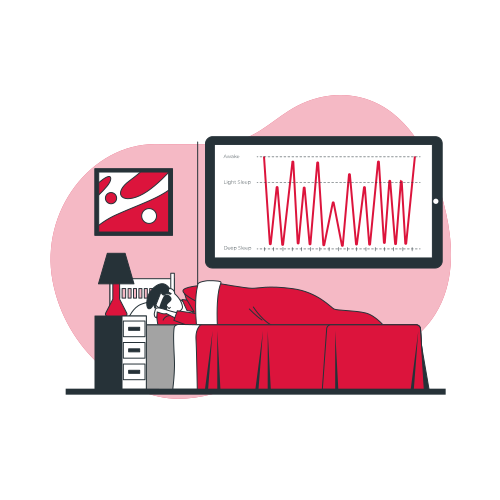
The symptoms are unspecific and arrive gradually: sleep that breaks at 3am, irritability or anxiety that feels out of character, brain fog, joint aches, weight settling around the middle despite no change in habits, periods that shift in length or heaviness before they become irregular.
Every one of those has an easier explanation available, work stress, young children, ageing, thyroid. And because hormone levels fluctuate erratically during the transition rather than declining smoothly, a single blood test taken on the wrong day can look entirely normal.
Why the earlier timing matters medically
Oestrogen is protective for bone density and has effects on cardiovascular risk. Reaching menopause around five years earlier means five additional years of living without that protection, which is why bone and cardiovascular health deserve attention sooner in Indian women, not at the age the international literature implies.
This is also the window where metabolic changes accelerate. Weight redistribution towards the abdomen during the transition is a genuine physiological shift, not a failure of willpower, and it raises the same metabolic risks described on our prediabetes page.
Where the Healthness+ assessment fits
The Health Risk Assessment scores sleep, mood, energy and metabolic signals separately, which matters here because perimenopause presents as a cluster rather than one symptom. A woman in her early forties with disrupted sleep, mood change and new central weight gain is a recognisable pattern, one that is usually treated as three unrelated complaints.
Common questions
How early can perimenopause start?
In India, given a mean menopause age of around 46, the transition commonly begins in the late thirties or early forties. That is earlier than most women expect, which is a large part of why it goes unrecognised.
Can a blood test confirm perimenopause?
Not reliably on its own. Hormone levels fluctuate considerably during the transition, so a single test can read normal in someone who is clearly perimenopausal. Diagnosis is usually made on symptom pattern, cycle changes and age, with tests used to rule other things out, thyroid in particular, since it mimics this closely.
Is weight gain during perimenopause inevitable?
Weight redistribution towards the abdomen is a real hormonal effect rather than a lapse in discipline. It is not inevitable in extent, and resistance training, protein intake and sleep quality all measurably influence how much of it happens.
Is this the same as menopause?
No. Menopause is a single point, twelve consecutive months without a period. Perimenopause is the transition leading up to it, and it is where most of the symptoms occur, sometimes over several years.
Sources
Every figure quoted on this page comes from one of the
following, checked against the published source. Clinical explanations are
drawn from the Healthness+ clinical knowledge base.
-
Age at menopause in India: a systematic review. Mean age at natural menopause reported at approximately 46.6 years, against roughly 51 years in Western populations.
-
National Family Health Survey (NFHS-5), 2019 to 21, Ministry of Health and Family Welfare, Government of India. Anaemia in women aged 15 to 49: 57.0%, up from 53% in NFHS-4.
Healthness+ provides preventive health assessment and coaching. We do not
diagnose, treat or cure disease, and nothing on this page should be used to
delay seeking medical care. If you have symptoms that concern you, see a
registered medical practitioner.